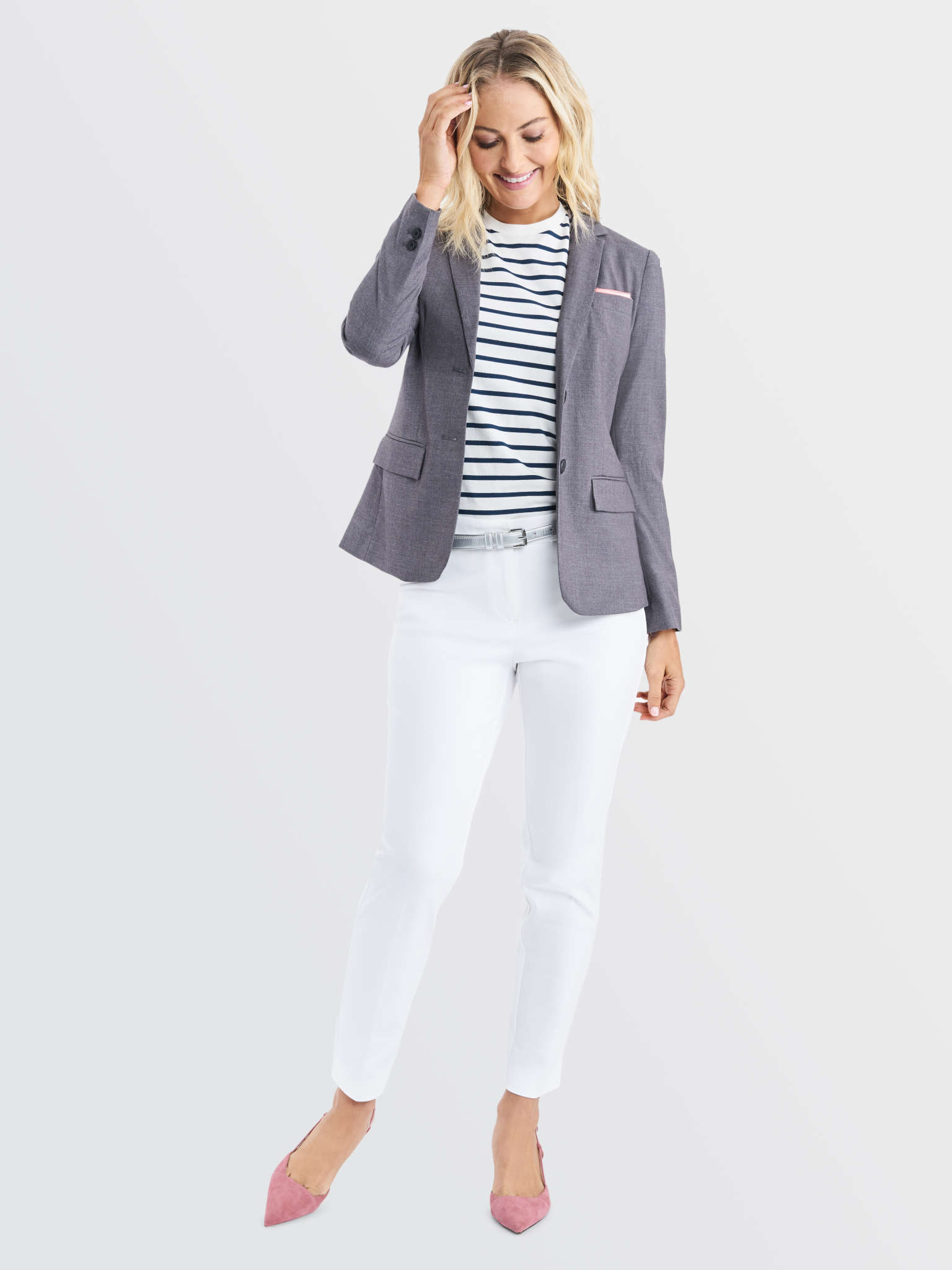
Start with visibility, not logo size.
Logo placement should follow the role of the wearer and the moment the guest sees them. A front-desk blazer, chef coat, housekeeping polo, and facilities jacket do not need the same brand treatment.
The premium move is usually restraint. Strong uniform programs use the logo where it helps identification, then let fit, color, fabric, and finish carry the brand where a mark would feel too promotional.
Refined marks.
Use tonal embroidery, smaller chest marks, name badges, or no exterior mark when the garment already reads as branded.
Useful clarity.
Use marks where guests or managers benefit from quick recognition without turning every garment into signage.
Durable identity.
Use washable applications and easy replacement logic for teams with higher wear, turnover, or replenishment needs.
Choose the application by garment and context.
| Application | Best fit | Watch-out |
|---|---|---|
| Tonal embroidery | Premium front-of-house layers, blazers, suiting, refined knits. | Low contrast may be too subtle for roles that need identification. |
| Contrast embroidery | Polos, shirts, aprons, and durable garments where clarity matters. | Large marks can quickly make a program feel promotional. |
| Patch or badge | Operational roles, facilities, security, events, or name identification. | Patch size and placement should be standardized by role family. |
| No exterior logo | Signature roles where color, silhouette, and styling already identify the brand. | Managers need another way to keep garments assigned and consistent. |
Turn the rule into a repeatable program.
Audit wearer visibility.
Group roles by guest visibility, management visibility, and operational need before choosing logo applications.
Map applications by garment.
Define what happens on blazers, shirts, polos, aprons, outerwear, dresses, and accessories.
Create approval standards.
Document placement, thread color, size, location, badge rules, and exceptions so future orders do not drift.
The best logo system feels intentional even when the mark itself is quiet.