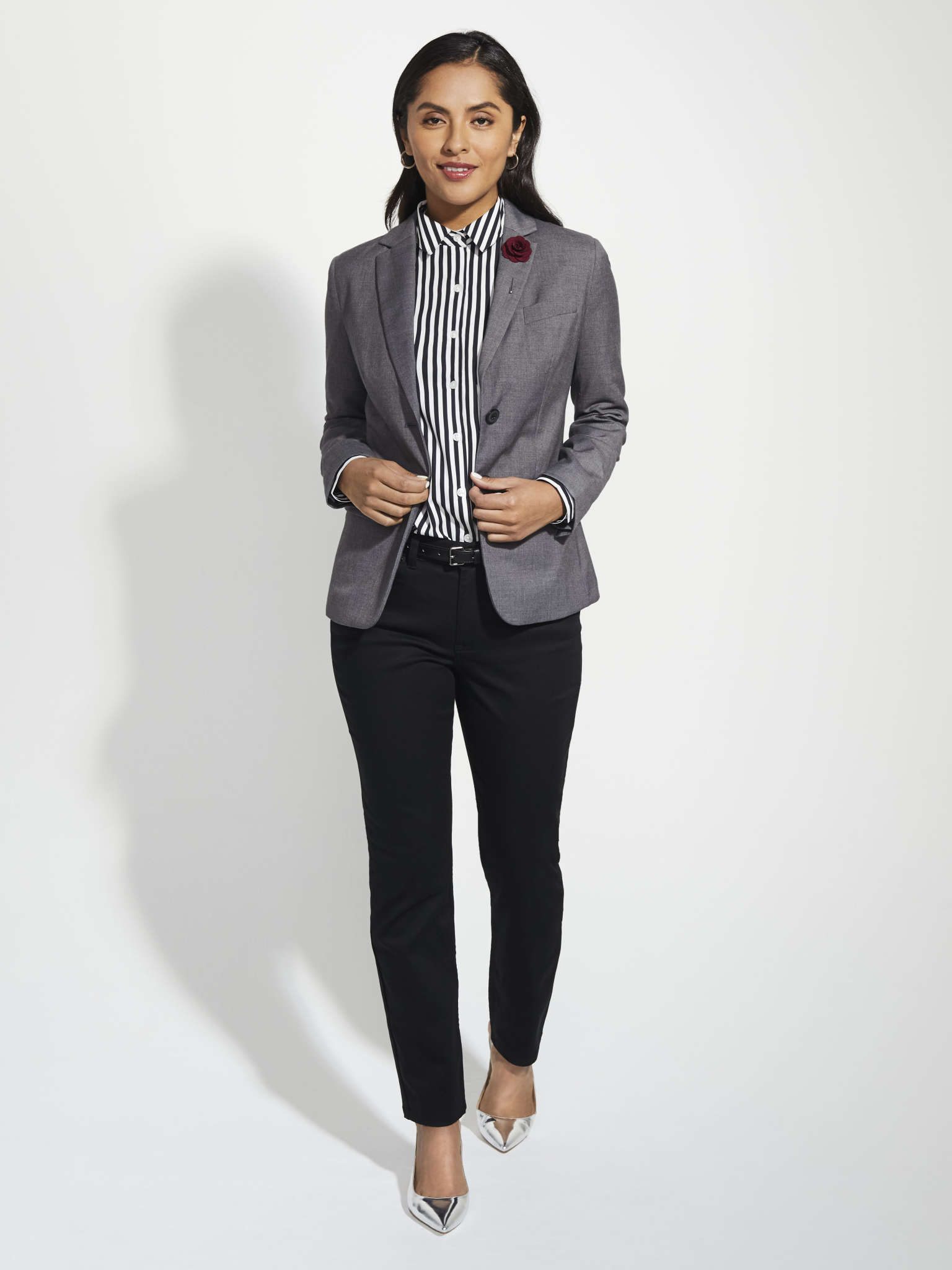
A uniform program is an operating system for how the brand appears in motion.
Hospitality teams often start with the visible problem: the current garments feel dated, inconsistent, too casual, too formal, too difficult to replace, or too disconnected from the guest experience. The better starting point is the full program logic underneath those garments.
A strong program gives each department the right level of polish, comfort, durability, brand expression, and ordering support. It also gives managers a repeatable way to keep the program consistent after the first launch.
Understand who wears what, where they work, and how visible they are to guests.
Define brand, fit, color, logo, and replacement standards before selection begins.
Connect product choices to ordering, approvals, rollout timing, and replenishment.
What to gather before you start.
- Department list, role list, and location count.
- Current pain points from managers and wearers.
- Brand standards, color direction, and logo usage rules.
- Launch deadline, phased rollout needs, and approval owners.
- Known replenishment needs, turnover patterns, and ordering constraints.
Start with departments, not garments.
Product decisions become much easier once the team understands the property map. A resort, city hotel, restaurant group, or mixed-use campus may all use hospitality uniforms, but the program logic can be very different.
Begin by listing every department that needs a uniform, then note where that team works, how guests encounter them, and what daily movement looks like. This keeps the program from becoming a single aesthetic decision forced onto very different roles.
Ask: which teams shape first impressions, which teams need quiet consistency, and which teams need durability more than polish?
Separate visible roles, support roles, and specialty teams.
Front desk, bell, valet, host, and manager roles usually need the strongest brand signal because they shape the first impression. Housekeeping, engineering, facilities, culinary support, and public-area teams often need a stronger functional foundation.
The goal is coordination, not sameness. A guest should feel one brand language across the property while employees get garments that make sense for the work they actually perform.
| Role family | Program priority | Useful uniform logic |
|---|---|---|
| Front of house | Polish, fit, brand consistency | Tailored layers, refined shirting, controlled color, visible standards. |
| Food and beverage | Movement, service pace, atmosphere | Layerable separates, aprons, washable foundations, role-specific accessories. |
| Spa and resort | Comfort, climate, ease | Soft layers, breathable fabrics, warm-weather palettes, restrained decoration. |
| Operations and support | Durability, replacement, safety | Reliable staples, easy replenishment, role clarity, practical fit ranges. |
Define brand standards before product selection.
Brand standards should answer the questions buyers otherwise solve one garment at a time: how formal the program should feel, which colors are acceptable, how logo marks appear, and where each department can flex.
A hospitality uniform program should make the brand easier to recognize, not harder for teams to manage.
For most hospitality buyers, the useful standard is not a rigid costume. It is a shared language for silhouette, color, finish, and logo restraint that can scale across departments and seasons.
Choose in-stock foundations, customized pieces, and custom moments.
The strongest programs usually combine dependable in-stock foundations with selective custom work. In-stock pieces help with budget, lead time, size range, and replacement. Custom pieces help when a signature role needs a distinct look or an operational requirement is too specific for standard product.
The garment must be easy to reorder, size broadly, launch quickly, or support high-turnover teams.
A stock garment is close, but needs embroidery, trim, color editing, special accessories, or a tighter brand finish.
The role is iconic, the property has a signature service moment, or the operational need cannot be solved with available product.
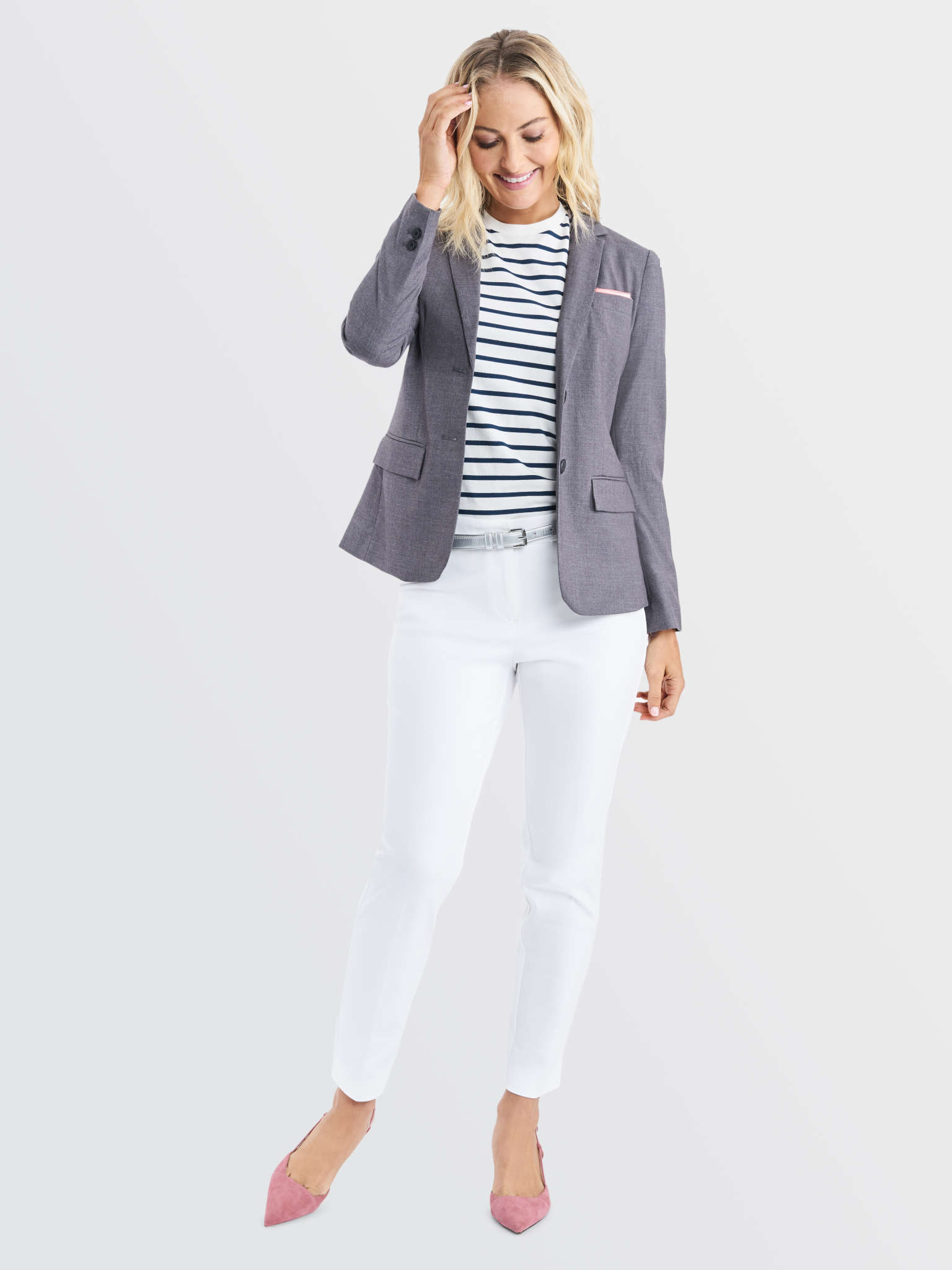
Move from planning into a curated assortment.
Once the program logic is clear, buyers can evaluate relevant suiting, shirts, accessories, and look direction without losing the operational frame.
Set decoration and logo rules.
Logo placement can elevate a uniform program or make it feel noisy. Hospitality programs often benefit from a restrained approach: visible identification where needed, subtler marks where the garment itself should carry the polish, and clear exceptions for departments that need badges or role identifiers.
Document which applications are allowed by garment type. Embroidery, patches, name badges, tonal marks, and no-logo garments should all be deliberate choices rather than one-off requests.
Plan sizing, ordering, approvals, and rollout timing.
The launch plan should be built alongside the assortment. A beautiful program can still fail if managers do not know who approves orders, employees do not know how sizing works, or replacement garments are not available after the first issue.
Lock these before ordering.
- Who owns final assortment approval by department.
- Whether orders are placed centrally, by managers, or by employees.
- How sizing support, exchanges, and exceptions are handled.
- Which teams launch first and which teams can phase in later.
Maintain the program after launch.
Hospitality uniforms live in daily operations. The program needs replenishment logic, clear ownership, and a way to improve after launch as fit issues, staff changes, product performance, and seasonal needs become visible.
For many teams, a managed team store or role-specific ordering experience is what turns the initial uniform project into an ongoing system. It keeps the brand standard accessible without requiring every replacement order to become a new procurement project.
Questions hospitality buyers ask.
Where should a hospitality uniform program start?
Start by mapping departments, roles, visibility, movement, climate, ordering needs, and brand expectations before choosing garments.
How many looks should a hotel uniform program include?
Most properties need coordinated role families rather than one uniform for everyone. Front desk, bell, valet, food and beverage, spa, housekeeping, engineering, and management may each need different garment logic.
When should custom uniforms be used?
Custom uniforms are best for signature guest-facing roles, unusual operational needs, or brand moments that cannot be achieved with in-stock foundations and decoration alone.
How can a property keep the program consistent after launch?
Use clear style rules, replenishment planning, approval ownership, manager communication, and a managed ordering model so teams can maintain the program after the first launch.